
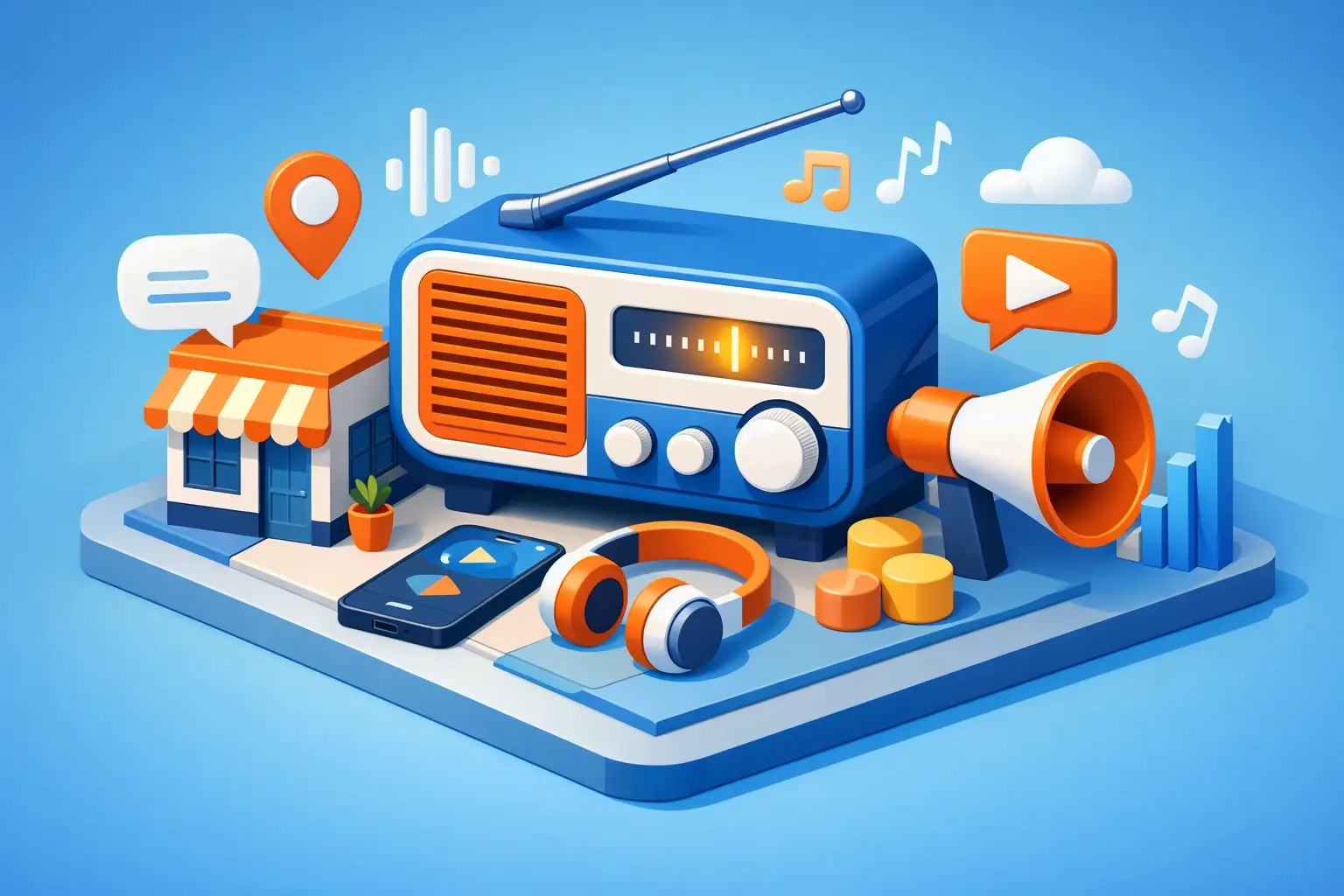
A lobby playlist can fill a silence. Branded radio for small business can make a customer feel like they have stepped into a place with an actual pulse. That difference matters when every coffee shop, salon, gym, boutique, and service brand is fighting to be remembered after the customer walks out the door.
A real station is more than a pile of songs with your logo shoved between tracks. It is a programmed sound, a recognizable voice, and a reason for people to linger, smile, move a little, or remember your name when they need what you sell again. Think less elevator music, more mixtape from the friend with suspiciously excellent taste.
What branded radio actually does
Branded radio is a streaming station created around your business, audience, and personality. It can play through your physical location, live on your website, support an event, or give customers something to hear wherever they are. Depending on the setup, it may include a custom station name, music programming, recorded business messages, sponsor spots, live DJ segments, listener requests, and a shareable listening link.
The point is not to turn your business into a radio conglomerate. The point is to create a consistent sonic identity. Your colors, signage, service style, and social posts already say something about you. Music says it faster, often before a customer has read a single word.
For a vintage clothing shop, that might mean bright 1980s new wave and pop with just enough deep cuts to reward the people who know. For a fitness studio, it may mean high-energy dance tracks that keep the room moving. A neighborhood bar may want weekend programming with party-friendly classics and short reminders about trivia night, specials, or the next big game.
The right answer depends on the business. What does not work is selecting music because someone thinks it is “safe” and then wondering why nobody feels anything.
Why branded radio for small business beats a generic playlist
Generic playlists are easy. Easy is not always bad, especially when you simply need background sound by lunchtime. But they are built to please everybody a little, which often means they represent nobody at all.
A branded station creates repetition with personality. A listener hears the same tonal world each visit. They begin to associate that world with your business. Maybe they hear a favorite track while browsing, getting a haircut, finishing a workout, or planning an event. That emotional connection is hard to manufacture with another endlessly recycled “Chill Vibes” playlist.
There is also the human factor. An on-air host can introduce a song, call out an occasion, share a quick bit of local flavor, or invite a request. That is a much warmer experience than an algorithm quietly deciding that your customers need the same song for the fourth time this month.
A custom station can keep working beyond your four walls, too. Customers can listen at home, in the car, or at work. That creates a touchpoint between purchases without demanding another coupon blast in their inbox. If the station sounds great, people may share it because it is fun, not because they were asked to complete a marketing task. Big difference.
Start with the feeling, not the song list
The most useful first question is not, “What songs do we like?” Ask, “What should people feel here?” Fast, relaxed, stylish, mischievous, nostalgic, confident, celebratory? Pick two or three words, then build from there.
A business that promises calm, expert care should not blast frantic club tracks at 10 a.m. A retro arcade that plays soft acoustic coffeehouse music has missed a glorious opportunity. Sound has to support the setting, the customer rhythm, and the staff experience.
Staff buy-in counts more than owners sometimes expect. Your team hears the station for hours. If the music becomes irritating or wildly inconsistent, morale takes a hit and the customer experience follows. Invite a few trusted employees into the early conversation, but do not let the process collapse into a 17-person committee playlist. Someone needs to protect the sound.
Programming is where an experienced curator earns their keep. Music needs energy changes, familiar anchors, surprising finds, clean transitions, and sensible dayparting. Morning shoppers may respond differently than Friday-night regulars. A good station does not just play songs. It reads the room, even when that room is digital.
Keep your on-air messages useful and light
A station should sound like entertainment first. If every third break is a sales pitch, listeners will bail faster than a dancer when the DJ kills the beat.
Use short messages that help people act. Mention an upcoming event, a seasonal offer, an appointment reminder, a new menu item, or a simple invitation to visit. Keep the voice aligned with your business. A playful store can be cheeky. A professional service can be friendly and reassuring. Either way, skip stiff corporate language.
Frequency matters. A few well-placed mentions can stick. Constant repetition becomes audio wallpaper, or worse, an annoyance staff and customers learn to tune out. Your station provider should help decide the spacing based on how often people listen and where the station is heard.
If you are sponsoring an existing station rather than building one from scratch, the same principle applies. Choose a station whose audience already makes sense for your business. A local tax firm may not need a dance audience at midnight. A salon, event company, brewery, boutique, or retro-themed business might find that upbeat 1980s and 1990s listeners are exactly the crowd they want to reach.
Know the practical details before you press play
Music licensing is not the sexy part. It is, however, the part that keeps a good idea from becoming a headache. Business music use and online streaming can involve different rights and requirements than personal listening accounts. Do not assume a consumer streaming subscription covers public playback in your store or a station you distribute online.
Ask a prospective radio host exactly what is included: music licensing support, streaming infrastructure, mobile access, custom imaging, DJ voice work, listener analytics, scheduling, and technical help. Also ask who owns the station assets if you stop working together. Clear answers now prevent awkward silence later.
Budget can vary a lot. A sponsored segment on an established station will usually cost less and launch faster than a fully custom station. A custom station gives you more control, but it requires time for strategy, production, programming, approvals, and ongoing updates. Neither option is automatically better. The best fit comes down to your goals and whether you want reach, ownership, or both.
Do not ignore measurement. You do not need to become obsessed with dashboards, but you should know whether people are listening. Look at listener counts, listening duration, requests, message responses, event attendance, and customer comments. If a song-driven campaign gets people asking about your Friday playlist or tagging your business, that is real evidence the sound is doing its job.
Give listeners a reason to participate
The strongest small-business stations are not one-way broadcasts. They invite people in. A request feature can turn a regular customer into a participant. A themed countdown can give people something to anticipate. A quick on-air shoutout for an anniversary, fundraiser, or local event makes the station feel connected rather than canned.
This is where a DJ-led approach shines. At Dance Your Ass Off Radio, the joy is in digging up upbeat gems, mixing familiar favorites with “wait, I love this song” moments, and letting listeners have a say. That same spirit can give a custom business station its backbone. Your audience does not need another anonymous feed. They need a reason to come back and turn it up.
Be realistic about participation, though. If your customers are busy professionals grabbing coffee between meetings, daily request contests may be too much. If you run a destination shop, community venue, or event-focused business, requests and themed programming may become part of the fun. Match the interaction level to how your customers actually behave.
Make the launch feel like an event
Do not quietly add a station and hope people notice. Give it a name, explain the vibe in one sharp sentence, and tell customers where to hear it. Let staff mention it naturally. Put it in your customer communications, at the counter, and on event materials. If it fits your brand, launch with a request week or a simple prize for the first listeners who share their favorite track.
Then keep it fresh. Refresh promos when seasons change, add programming around events, and pay attention to what gets reactions. A station should evolve without losing its identity. You are building a familiar place for people to return to, not programming a museum exhibit.
Start with the feeling you want customers to carry away, find a radio partner who understands that feeling, and let the music do what a discount code never can: make your business part of somebody’s good day.